
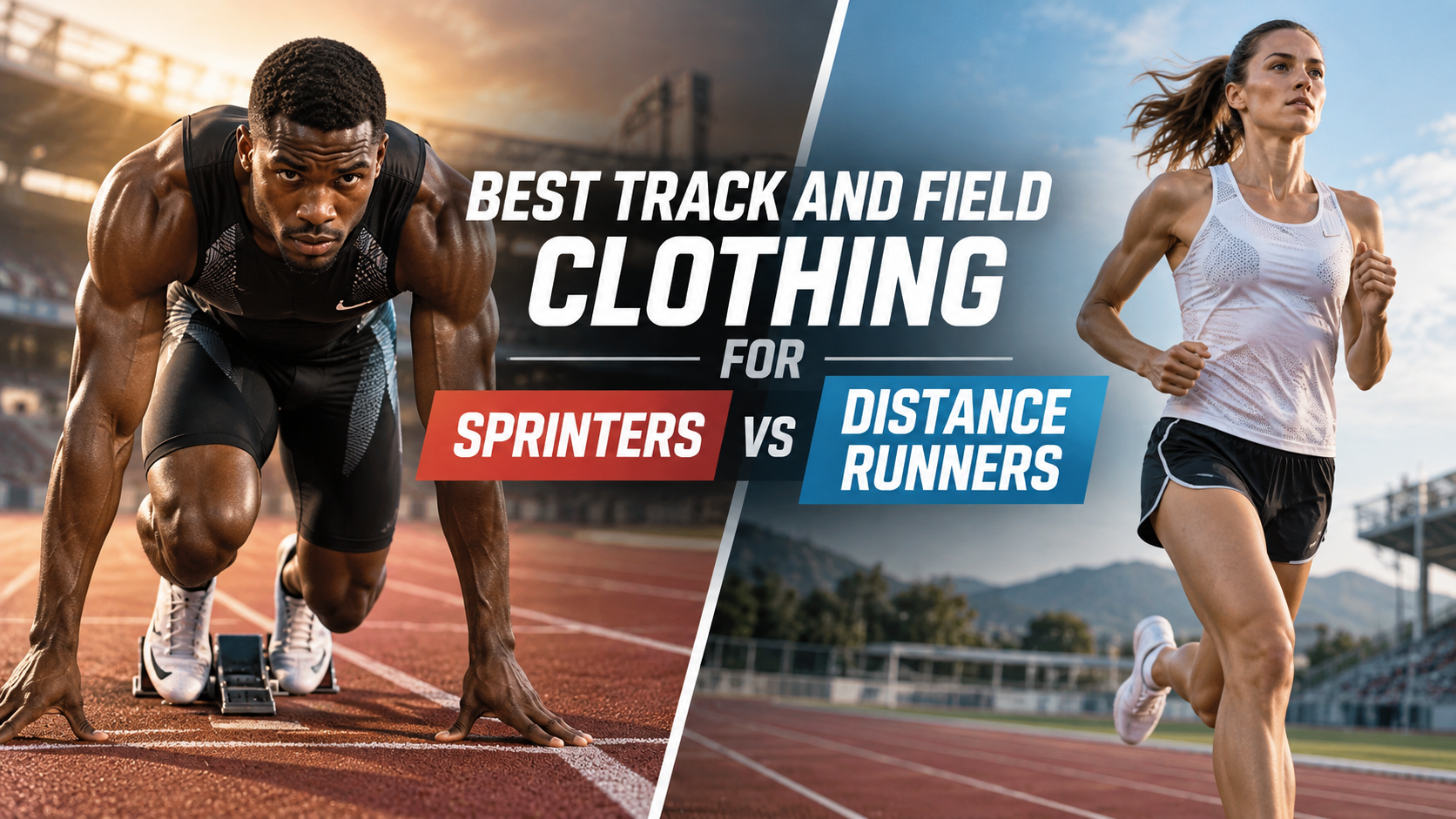
Track and field is a sport where fractions of a second and marginal gains make all the difference. Training and talent are the bases of success, but specialized track and field clothing is also significant. Using the proper equipment reduces distractions, controls body temperature, and promotes an ideal biomechanical movement.
But track and field isn't all the same. The 100m sprinter has different physiological requirements for competition compared with the 10,000m runner. This means that their attire requirements are quite different.

Source: gemini.google.com
Key Differences in Sprinting vs Distance Running
The difference between sprint and distance apparel stems from the fundamental nature of the events.
|
Feature |
Sprinting |
Distance Running |
|
Primary Focus |
Maximum speed and aerodynamics |
Endurance and continuous comfort |
|
Duration |
Short, explosive bursts (seconds) |
Prolonged, steady output (minutes to hours) |
|
Clothing Profile |
Tight, form-fitting, compressive |
Loose, airy, minimalist |
|
Key Risk Factor |
Muscle strain and aerodynamic drag |
Chafing and overheating |
Best Track and Field Clothing
Fabric and Material Selection
In either case, good track-and-field wear is made from engineered synthetic fabrics rather than cotton.
- Moisture-Wicking Fabrics: Polyester and nylon are crucial. They remove sweat from the skin and transport it to the exterior of the garment for rapid evaporation, preventing the athlete from getting sweaty.
- Lightweight and Breathable: High-quality equipment is nearly weightless. In high-heat areas (such as under the arms and lower back), strategic mesh panels allow the most airflow.
- Stretch and Flexibility: There is an element of stretch or flexibility, typically with spandex or elastane, so the clothes move with the athlete. Four-way stretch materials allow unrestricted stride and arm drive.
Clothing for Sprinters
The enemy for sprinters is aerodynamic drag. Loose material blowing in the wind comes with the same disadvantages as a parachute, especially when traveling at maximum speed.
- Sprinters wear half-tights (compression shorts), skin-tight singlets, or crop tops because they need to be tight-fitting. This profile is sleek, cuts with little air resistance.
- The advantages of compression: Compressed uniforms aren't only for decreasing drag. They increase blood flow to hot spots of the body (such as the hamstrings and quadriceps), help keep muscles warm during multiple sprints, and minimize vibration when hitting the ground while running.
- Sprint Spikes: These are not clothing items; they are shoes that are part of the uniform. They are hard, aggressive, and lack heel cushioning, so the runner runs on their toes to generate more power.

Source: gemini.google.com
Clothing for Distance Runners
The focus of distance runners is more on moisture control and chafing prevention than on outright aerodynamics. A poorly situated seam can cause great discomfort, especially over several miles.
- Lightweight Shorts and Tanks: Distance runners usually wear split shorts that allow full leg movement and fit tightly, and very breathable tank tops.
- Chafe-Free Construction: Avoid track and field garments with flatlock seams or seamless construction to minimize frictional irritation during repetitive, long-duration moves.
- Distance events: Long compression socks or calf sleeves are popular choices. They assist with venous return (blood returning to the heart) and reduce lower leg fatigue during prolonged running.
Accessories and Gear
Both disciplines use specialized track and field uniforms and accessories to address environmental conditions and measure parameters.
- For Both: Sweatbands keep perspiration out of the eyes, while lightweight, UV-blocking sunglasses prevent squinting, which wastes facial energy and causes neck tension.
- For Distance Runners: GPS watches and heart-rate monitors are staple accessories. For the distance athletes, real-time information is key to pacing, split times, and knowing whether they are in their desired cardiovascular zones.
Seasonal and Environmental Adjustments
Track seasons can be unpredictable, from freezing early spring mornings to blistering mid-summer afternoons.
- Cold-Weather Layering for Distance: Distance runners need modular layers. They tend to begin in track pants, long-sleeve base layers, and light windbreakers, removing them as they warm up.
- Minimalist Approach for Sprinters: For sprinters, it is important to keep their explosive muscles extremely warm to reduce the risk of tears, so that they might wear thick fleece sweatpants until just before the starting gun. When they're racing, though, they're down to their very basic aerodynamic equipment, no matter the outside temperature.
Care and Maintenance Tips
Performance fabrics have special care requirements to keep them stretched and wicking.
- Washing Advice: Synthetic track-and-field garments are always washed in cold water. Elastane can be affected by hot water, and the garments can lose their shape and compressive qualities.
- Don't use fabric softeners or dryer sheets. They leave a waxy coating on the fibers, rendering them incapable of wicking moisture.
- Drying: Air drying is the most secure way. If you need to use a machine, opt for the lowest tumble-dry setting to prevent fabric damage and shrinkage.

Source: gemini.google.com
Why Choose Affordable Uniforms Online?
When it comes to track and field uniforms, it's easy to see why it's important to strike the right balance between toweling fabric and affordability, whether for a team or a single committed athlete.
At Affordable Uniforms Online, we know that every second matters on the track. This is why we offer the finest track and field clothing made for explosive sprinting and endurance running. From aerodynamic compression for maximum speed to split shorts for maximum breathability, our range has a piece for every event and every type of compression.
We're proud of our high-quality athletic clothing that will get athletes up and running at their absolute best without blowing your team's budget.
Ready to upgrade your team's track and field gear? Equip your athletes for a record-breaking season with our complete collection of specialized performance apparel at Affordable Uniforms Online.
Conclusion
Wearing the right track and field clothing is an investment in the athlete's performance and body. Athletes can choose clothing that reduces discomfort and maximizes their natural abilities when they understand the unique biomechanical and environmental requirements of sprinting and distance running. From high school teams to personal bests, choosing the right fabrics and fits will set you up for success at the finish line. The first step towards a successful season is to find an affordable uniform solution that meets all technical requirements.
Frequently Asked Questions
Can sprinters and distance runners wear the same track and field clothing?
Both have moisture-absorbing fabrics, but they differ in cut. Any equipment that is loose, draggy, or chafing is not appropriate for sprinters, while any equipment that is tight or snug is not appropriate for distance runners.
Why do sprinters often wear compression sleeves or tight shorts?
Aerodynamic drag is decreased at high speed using a compression gear. It also helps maintain warm, explosive muscles, improve blood circulation, and reduce muscle vibrations, thereby reducing the risk of hamstring and quad strains.
How do I keep my performance running gear from smelling?
Synthetic fabrics may harbor bacteria that cause odors. Rinse gear right after sweating with a sport-specific detergent, and never put anything in the fabric that is a fabric softener, as it will trap the odor inside the fibers.