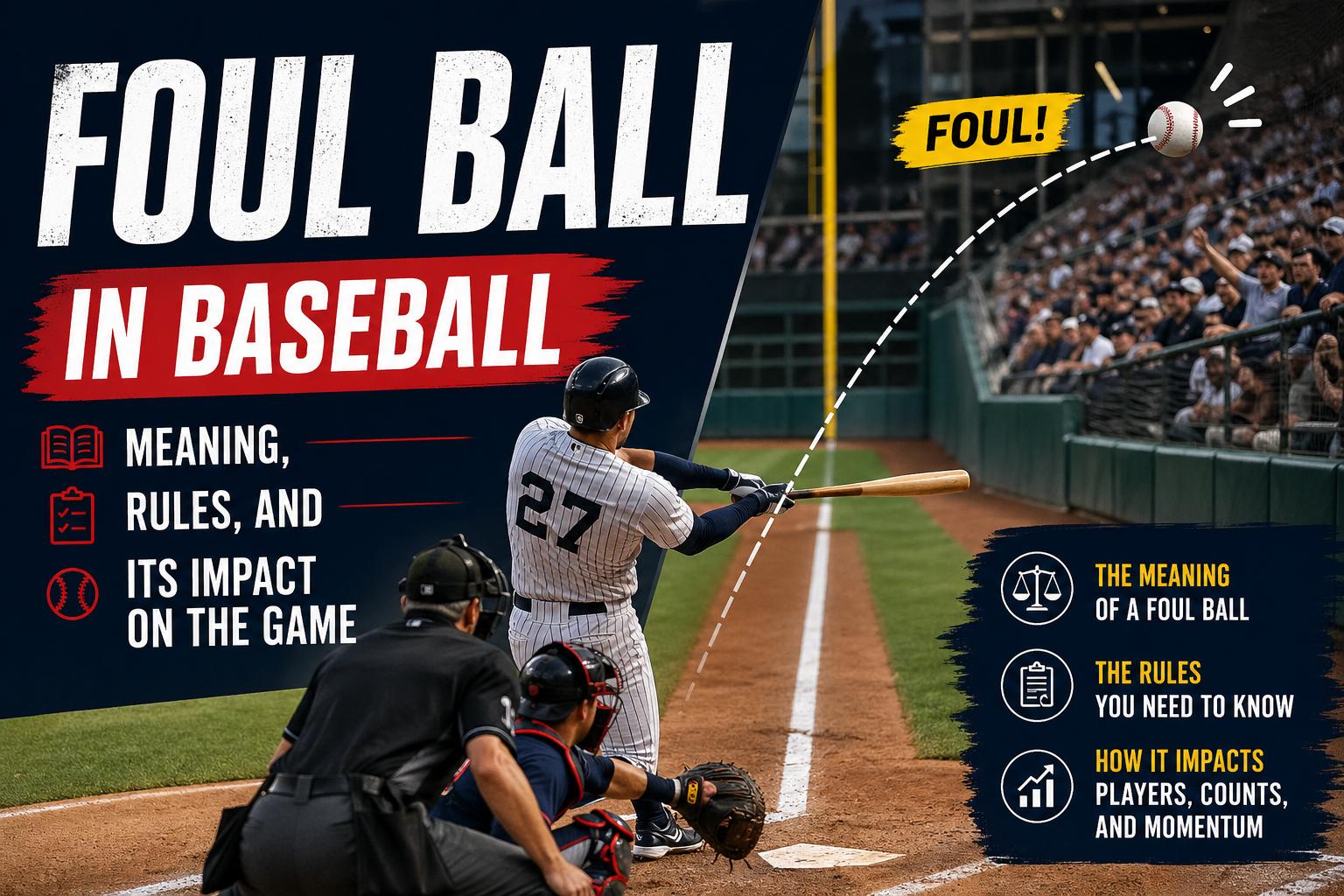
More than 500 million people watch baseball worldwide. Being played in more than 40 countries, baseball remains one of the most watched sports events all around the globe. Like all other technical terms, the foul ball in baseball is an important concept that both players and fans must know before stepping onto the field. A foul ball can immediately change an at-bat. If you are thinking of a hitting opportunity or want to help your pitcher regain control, a foul ball is your best strategy to use.
This blog covers what a foul ball is. How it works and impacts the overall team’s winning probability. If you are a beginner who wants to broaden your baseball knowledge, you are in the right place. Stay tuned to know the rules of a foul ball, its different types, and everything here.

Source: gemini.google.com
What Is a Foul Ball in Baseball?
When a batter hits the ball outside the field territory, this action is commonly known as a foul ball in baseball. Generally, the experts have divided the baseball field into two main areas known as fair territory and foul territory. The area between two foul lines from home plate to the outfield fence is known as fair territory. Everything else apart from those lines falls under the category of foul territory.
If a batter hits the ball and it lands outside the foul lines. Or sometimes, before falling in the fair territory, it touches the foul territory's lines; the umpire signals it as a foul ball. In such scenarios, the player has to immediately stop playing. And the batter gets a strike depending on the count.
In baseball, foul balls are as common as silly mid-ons in cricket. It happens when a batter mistakenly misjudges the swing timing, or the bat comes in contact with the ball at the wrong angle.
Understanding Fair Territory vs Foul Territory
To know more about foul balls in baseball, let’s get to know how the experts divide the field. There are two standards for lines between the home plate and the field. These lines start from the on field home plate, following the edges of the field towards the outfield fences. These lines hit a boundary all around the playing ground of fair territory.
You can say that a ball falls in fair territory if:
- The ball lands inside the foul lines, whether infield or outfield.
- If the ball touches either the first or third base.
- The ball hits the foul pole inside the outfield.
In contrast, the umpire signals the ball as a foul one if:
- It lands outside the foul lines before the batter reaches the first or third base.
- The ball touches the foul territory area before falling into the fair territory region.
- The ball rolls outside the foul lines.
These scenarios help the players and fans alike to decide whether the game will continue or stop immediately.
Rules of a Foul Ball in Baseball
For clear and precise games, the experts have a list of baseball rules to define different scenarios, whether the umpire must signal the ball as a foul or not. These rules play a key role in making consistent decisions during nail biting games.
1. A Foul Ball Counts as a Strike
When a baseball batter hits a foul ball, the umpire calls it a strike. However, keep in mind that the baseball batter cannot strike out on these kinds of foul balls.
For example:
- If the batter hits a foul ball after two strikes, the count will stop at 2 strikes.
- The at-bat continues until your batter hits the ball inside the fair territory region. The player continues to play until or unless the pitcher retires from him. It means the batter either hits a fair ball or strikes out and is sent back to the dugout.
2. Foul Balls Stop the Play
Whenever a batter hits a foul ball, the game must be stopped immediately. None of the runners can proceed, nor can the fielders continue playing. Umpires call it a foul ball. The game resets on the next pitch.
3. Foul Tips Are Different
Next comes the foul tip. If your ball slightly touches the bat and falls into the catcher’s glove, it is known as the foul tip. Unlike foul balls, the umpires claim it to be a live ball.
If the catcher cleanly catches the batter by picking the ball, the umpire calls it a strike. The players continue playing.
Types of Foul Balls in Baseball
When it comes to foul balls, no two foul balls work alike. Depending on different scenarios, experts have proposed different types of foul balls depending on how the bat hits the ball and where it lands.
1. Pop-Up Foul Balls
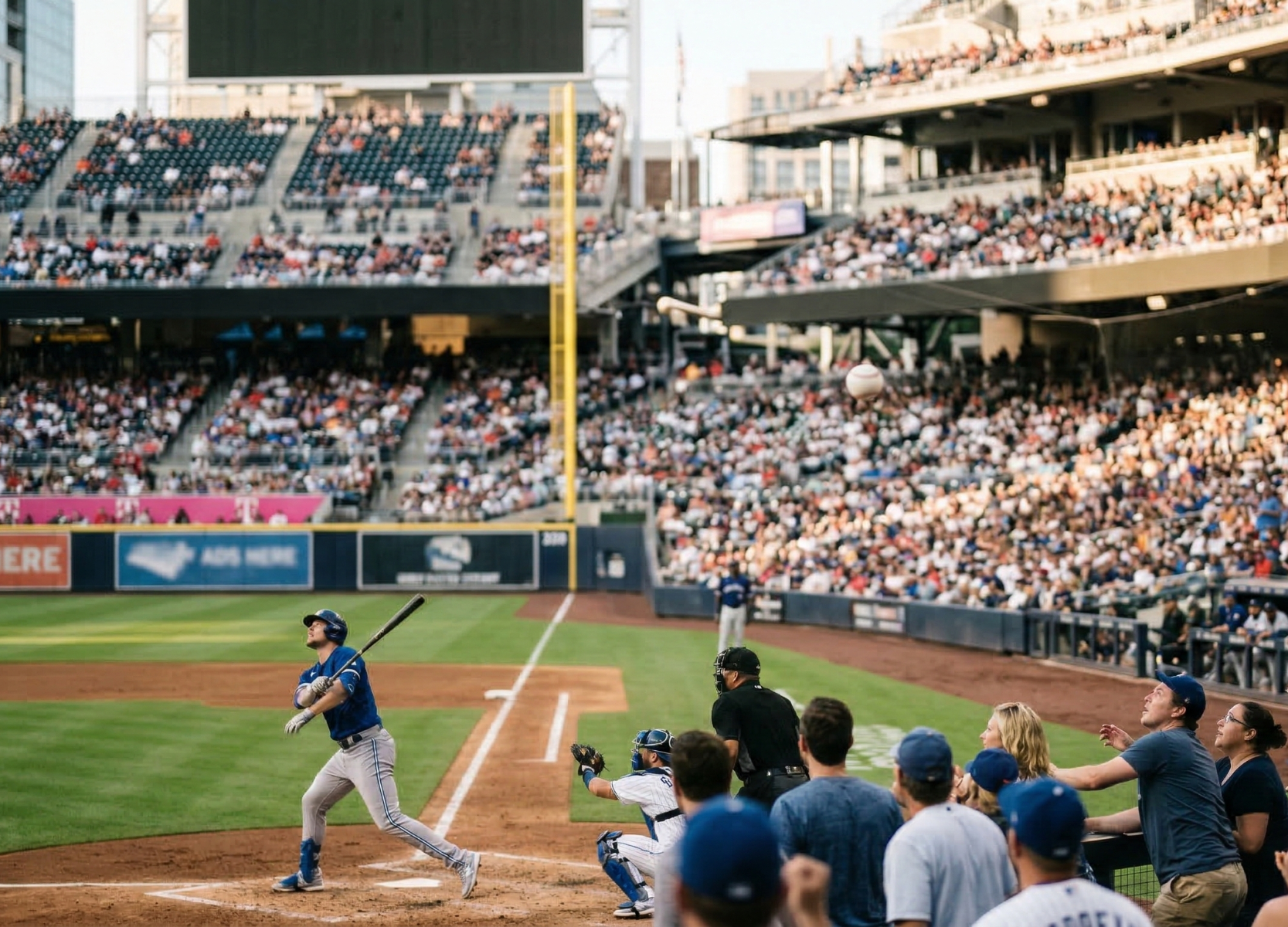
A pop-up foul ball happens when a batter forcefully hits the ball high into the air. But it stops right outside of fair territory. The fielder placed near the dugout or stands tries to catch these balls. If the fielder catches the ball before hitting the ground, your batter is called out.
2. Line Drive Foul Balls
When the batter hits the ball outside the foul line territory, they are known as line drive foul balls. Due to a shorter distance, these balls reach the stands in the blink of an eye.
3. Foul Bunt
In baseball, unlike other sports, bunts do not get a free pass. If it rolls outside the fair territory, it is treated exactly like any other foul ball. However, there is an exceptional rule for bunts. If a batter bunts the ball foul, claiming two strikes. The umpire calls out the batter.
With this rule, the game spirit stays alive as no batter will intentionally bunt foul balls repeatedly to extend their position at-bat.
Source: gemini.google.com
What Happens When a Foul Ball Is Caught?
Now you know, when the ball falls outside fair territory, it’s a foul ball. But your player can still have an out if a fielder catches foul ball before touching the ground.
For instance,
- When a catcher catches the foul pop up near the home plate.
- If the infielder catches the foul ball near the dugout area.
- The player is out if the outfielder catches a ball near the foul line.
If any of this happens, the batter is out; likewise, when the fielders catch fly balls in fair territory.
Famous Moments Involving Foul Balls
For years, fans and players recall many memorable moments regarding foul balls. Sometimes, foul balls bring dramatic at-bats turning into home runs or game-winning hits for teams.
One of the most famous foul ball examples happened back in the 2016 World Series. When a long at-bat hit multiple foul balls, it directly turns the momentum upside down for the hitting team. Such moments highlight how a simple foul ball can change the overall outcome of a baseball match.
Safety and Foul Balls for Fans
Apart from players, foul balls are a safety concern for fans as well. If somehow, the foul ball reaches the stands at high speed, anybody could get injured. Thus, stadiums install protective netting behind home plates and all around the foul lines.
Also, fans are proactive during matches when sitting near the field. No matter how much the risk is, if you catch a foul ball, people recall it as one of the favorite cherished traditions in live games.

Source: gemini.google.com
Conclusion
A foul ball in baseball, although it seems like a small part. But it plays a key role in defining the game strategy and shaping the at-bat play. Whether it brings an unexpected batter out or increases the pitch count, foul balls are the reason behind players' and fans' excitement and unpredictable game results on the field.
As a fan or player, you must know the rules and importance of foul balls to digest the game played on the ground. No matter how much baseball games evolve, the foul ball will always be an integral part of the game's strategy and tradition alike.
Need a perfect baseball uniform set? Visit Affordable Uniforms Online today and buy yours!